Last updated
Reviewed Jun 8, 2026Disclosure: Some links on this page are affiliate links - we may earn a commission at no extra cost to you. Commissions never change our recommendations. Read the full disclosure.
A portable sauna is the easiest, cheapest way to add a regular heat session to your routine when you rent, live in an apartment, or just do not want to install anything. You give up the high heat, steam, and full-body environment of a real cabin - but you gain a unit that costs a few hundred dollars, plugs into a normal outlet, and folds away when you are done. The decision is not which brand "wins": it is blanket vs pod vs steam tent, matched to your space and how close you want to get to a real sauna.
Below we compare the three formats honestly, cover the EMF question buyers ask about most, and point you to format-level picks. If you decide you actually want high heat and steam, jump to our best home sauna guide.
The three portable formats, compared
Almost every portable sauna is one of these three. This is the fastest way to narrow the field.
| Format | Heat | Heat-up | Storage | Typical price | Best for |
|---|---|---|---|---|---|
| Infrared blanket | 120-150F | 10-20 min | Folds into a closet | $200-$650 | Tiny apartments, lowest cost, recovery |
| Portable pod (infrared) | 120-150F | 5-15 min | Collapses to a flat box | $150-$900 | Upright, more sauna-like session |
| Portable steam tent | Warm + humid steam | 5-10 min | Folds; needs a boiler | $100-$400 | Steam feel, sinuses, lowest entry price |
Infrared blanket
- Heat
- 120-150F
- Heat-up
- 10-20 min
- Storage
- Folds into a closet
- Typical price
- $200-$650
- Best for
- Tiny apartments, lowest cost, recovery
Portable pod (infrared)
- Heat
- 120-150F
- Heat-up
- 5-15 min
- Storage
- Collapses to a flat box
- Typical price
- $150-$900
- Best for
- Upright, more sauna-like session
Portable steam tent
- Heat
- Warm + humid steam
- Heat-up
- 5-10 min
- Storage
- Folds; needs a boiler
- Typical price
- $100-$400
- Best for
- Steam feel, sinuses, lowest entry price
The honest headline: these run cooler than a real sauna (about 120-150F vs 150-195F), and in most pods your head sits outside the heat, so the experience is milder. That is the trade for no installation and easy storage. The long-term cardiovascular research is on hot, traditional saunas - portables are best framed as an accessible, convenient way to get a regular sweat and relaxation session, not as the most-studied format.
EMF and safety
Because you sit or lie close to the heating elements, EMF comes up more with portables than with a cabin. It is worth thinking about, not panicking about.
- Cheap carbon-heating units can emit measurable low-frequency magnetic fields at the surface. Better brands publish third-party EMF testing; a reasonable target is under about 3 mG at body distance.
- Prefer units that disclose accredited-lab EMF results for both magnetic and electric fields, measured where your body sits - not a vague "low EMF" sticker.
- Standard heat-session cautions apply: hydrate, keep early sessions short (10-20 minutes), and stop if you feel dizzy or unwell.
Which portable sauna fits your need?
Format-level starting points, not star-rated winners. Where we mention brands, treat them as well-regarded examples to compare, and check the maker's spec sheet before buying.
Best for tiny spaces & lowest fuss
Infrared sauna blanket
- Heat 120-150F
- Heat-up 10-20 min
- Power 120V plug-in
- Storage Folds into a closet
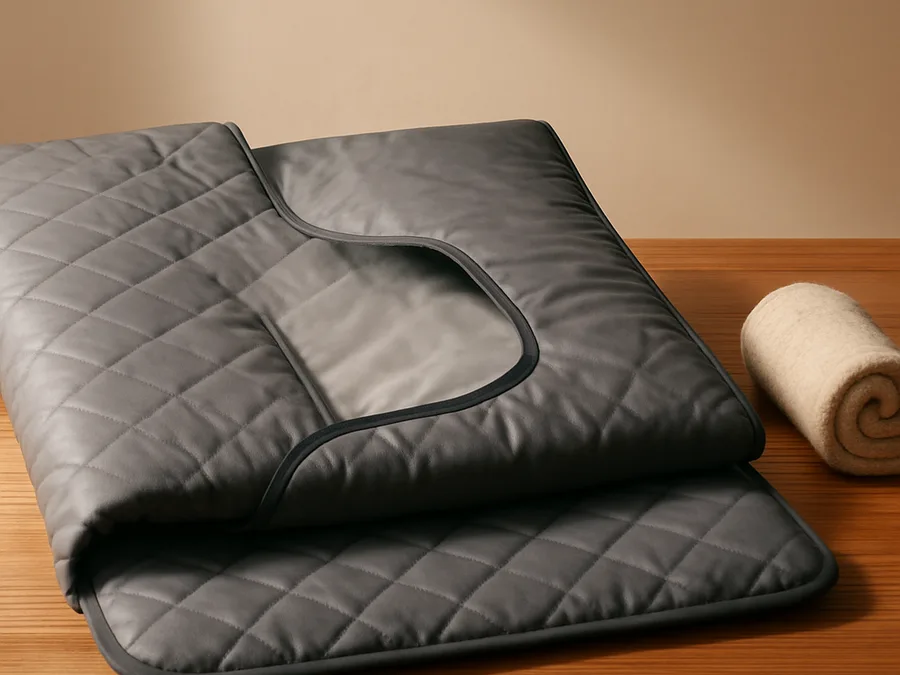
You lie inside a heated, zip-up wrap - the most compact and lowest-cost way to sweat at home. It stores in a closet, needs zero setup beyond plugging in, and is ideal for studio apartments and travel. The catch: you are lying down and wrapped, so it is the least 'sauna-like' of the three.
HigherDose, MiHigh, and Therasage are common blanket brands. Wipe-clean interiors and a published EMF test are the features worth paying for.
What works
- Smallest footprint; closet storage
- Lowest cost and running cost
- No setup beyond plugging in
What to weigh
- Least sauna-like (lying down, wrapped)
- Mild heat; no steam
- Cheap units can run higher EMF
Skip if: you want to sit upright or get anywhere near a real sauna feel.
Best for an upright, sauna-like session
Portable infrared pod
- Heat 120-150F
- Heat-up 5-15 min
- Power 120V plug-in
- Storage Collapses flat
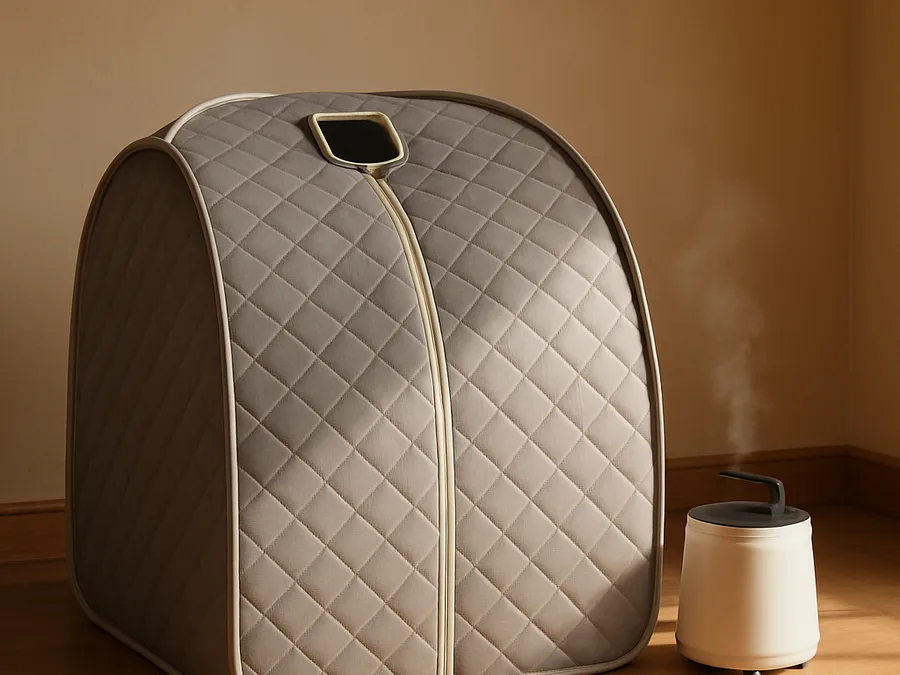
A collapsible box you sit in with your head out the top, so you can read or relax upright - the closest portable feel to a real sauna. It heats fast, folds flat, and suits apartments and small homes that want more than a blanket.
SereneLife and LifePro make popular budget pods; higher-end versions add better framing and controls. Look for a sturdy frame and a foot heater for a more even session.
What works
- Upright, more sauna-like than a blanket
- Fast heat-up; folds flat for storage
- Hands free to read or relax
What to weigh
- Head sits outside the heat
- Frames on budget units can feel flimsy
- Mild, dry heat; no steam
Skip if: you want full-body, head-included heat or a social space.
Best for steam feel on a budget
Portable steam tent
- Heat Warm + humid steam
- Heat-up 5-10 min
- Power 120V plug-in
- Storage Folds; boiler unit
A small water boiler fills a zip-up tent with hot steam, giving a humid feel closer to a traditional sauna or steam room - nice for sinuses and skin. It is the cheapest way in, but you fill and dry a water reservoir each time, so there is a little more upkeep.
Many are generic boiler-and-tent kits; prioritize a stable frame, a timer, and a boiler with auto shut-off.
What works
- Humid steam feel, not just dry heat
- Lowest entry price
- Folds away after use
What to weigh
- Water reservoir to fill and dry each time
- Head usually outside the tent
- Flimsiest builds in the category
Skip if: you want dry infrared heat or minimal cleanup.
When to skip portable and build instead
A portable is the right call if you rent, have very little space, or want the lowest possible entry cost. Consider stepping up to a built unit if:
- You want high heat and steam (a real 150-195F session, head included).
- You will use it daily for years - a plug-in infrared cabin is more durable and comfortable.
- You want a social space for two or more - look at outdoor barrels and cabins.
- You are handy and want the best value per square foot - see DIY builds and heaters.
A measured word on health benefits
Regular heat exposure is associated with relaxation and recovery benefits, and observational studies link frequent sauna use with cardiovascular and stress benefits - but that research is overwhelmingly on hot, traditional saunas, not low-heat portables. These are associations, not proof of cause. If you are pregnant, have heart disease, unstable blood pressure, or take medications, talk to a physician before starting. Hydrate and keep sessions short. We do not make detox, weight-loss, or disease-cure claims.
The bottom line
For the smallest space and lowest cost, an infrared blanket is the easiest way in. Want to sit upright in something more sauna-like? Choose a portable infrared pod. Prefer steam and the cheapest possible entry? A steam tent delivers. And if you find yourself wanting real heat, steam, and durability, move up to the best home sauna formats.
Frequently asked questions
Do portable saunas actually work?
Sauna blanket or portable pod - which is better?
Should I worry about EMF in a sauna blanket?
How much does a portable sauna cost?
Are portable steam saunas the same as infrared ones?
How we wrote this
A synthesis guide, not a hands-on review
This guide synthesizes manufacturer specifications, independent expert reviews, and verified owner feedback from sauna and recovery communities. We have not heat-tested every product, so we recommend by format and use-case rather than inventing star ratings. Where we name brands, we link to the maker's spec sheet so you can verify claims yourself. Health information is kept conservative and cited.
We have not personally tested every product mentioned. Where we describe a product we are synthesizing manufacturer specifications, independent expert reviews, building-code and electrical references, and verified owner feedback. Health information is kept conservative and sourced. Read our full methodology.
References
Sources synthesized to write this guide. Manufacturer pages cite specifications; independent publications, clinics, and code references cite real-world performance, safety, and evidence.
-
How infrared (radiant) heat differs from steam, and the temperature ranges portable units reach.
-
2026 price bands for blankets, pods, and portable units, plus running costs.
-
What to look for in portable infrared units, including heating elements and controls.
-
Power draw and the milder, drier character of low-wattage infrared used in portables.
-
Clinic summary of benefits and the contraindications worth knowing before you start.
Disclosure: Some links on this page are affiliate links. Commissions never change our recommendations. Read the full disclosure.