Last updated
Reviewed Jun 8, 2026Disclosure: Some links on this page are affiliate links - we may earn a commission at no extra cost to you. Commissions never change our recommendations. Read the full disclosure.
Search "best home sauna" and you get ranked lists that quietly assume you already know whether you want infrared or traditional, indoor or outdoor, plug-in or hard-wired. That is the actual decision - and it hinges on three things most lists skip: how much space you have, what your electrical panel can handle, and whether you want gentle daily heat or a hot, steamy classic session. Get those right and the specific product almost picks itself.
Below we compare the formats honestly, then walk through what suits different homes and budgets, and finish with the installation realities. When you want hard numbers for your own build, the sauna cost calculator turns your choices into an itemized cost range.
The five home sauna formats, compared
Every home sauna is a variation on five formats. This is the fastest way to narrow the field before you look at any single product.
| Format | Temp | Heat-up | Electrical | Typical price | Best for |
|---|---|---|---|---|---|
| Infrared cabin | 110-150F | 10-20 min | 120V plug-in | $1,500-$8,500 | Daily use, renters, easy install, recovery |
| Traditional electric | 150-195F | 30-45 min | 240V circuit | $3,000-$14,000 | Heat & steam lovers, classic experience |
| Wood-burning | 150-195F+ | 60-90 min | No heater circuit | $4,000-$15,000 | Off-grid & detached outdoor builds |
| Outdoor barrel | 150-195F | 40-60 min | 240V or wood | $4,000-$12,000 | Backyards, social use, fast-ish heat-up |
| Portable / blanket | 120-150F | 5-15 min | 120V plug-in | $200-$1,500 | Apartments, lowest cost, storage-friendly |
Infrared cabin
- Temp
- 110-150F
- Heat-up
- 10-20 min
- Electrical
- 120V plug-in
- Typical price
- $1,500-$8,500
- Best for
- Daily use, renters, easy install, recovery
Traditional electric
- Temp
- 150-195F
- Heat-up
- 30-45 min
- Electrical
- 240V circuit
- Typical price
- $3,000-$14,000
- Best for
- Heat & steam lovers, classic experience
Wood-burning
- Temp
- 150-195F+
- Heat-up
- 60-90 min
- Electrical
- No heater circuit
- Typical price
- $4,000-$15,000
- Best for
- Off-grid & detached outdoor builds
Outdoor barrel
- Temp
- 150-195F
- Heat-up
- 40-60 min
- Electrical
- 240V or wood
- Typical price
- $4,000-$12,000
- Best for
- Backyards, social use, fast-ish heat-up
Portable / blanket
- Temp
- 120-150F
- Heat-up
- 5-15 min
- Electrical
- 120V plug-in
- Typical price
- $200-$1,500
- Best for
- Apartments, lowest cost, storage-friendly
The honest headline: the long-term cardiovascular research is overwhelmingly on traditional Finnish saunas, not infrared. Infrared still has real benefits and you will actually use it daily because it heats fast and needs no electrician - but if you are buying for the most-studied format, that is traditional. Choose on lifestyle and install reality, not on health-claim marketing. If it is down to those two, our infrared vs traditional sauna comparison settles it quickly.
Which sauna fits your home and budget?
Use these as starting points. Each card is a format-level recommendation with the specs that matter and the trade-offs to weigh - not a star-rated "winner," because we have not heat-tested every unit. Where we mention brands, treat them as well-regarded examples to compare, and check the maker's spec sheet before buying.
Best for most homes & renters
Plug-in infrared cabin
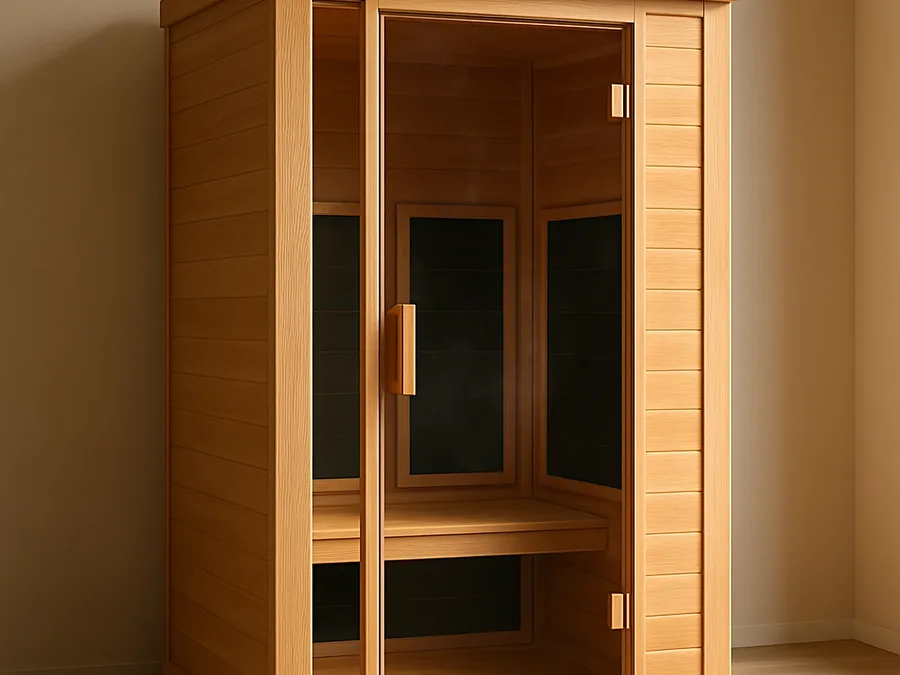
- Temp 110-150F
- Heat-up 10-20 min
- Power 120V plug-in
- Install None (plug & play)
If you want a sauna you will actually use most days, an infrared cabin is the path of least resistance. It plugs into a normal outlet, heats in 10-20 minutes, and runs cool enough for a comfortable 30-45 minute session - which is why it suits apartments, basements, and anyone who does not want to call an electrician.
Well-regarded examples include HigherDose, Sun Home, and Clearlight. If you sit close to carbon panels daily, look for independent low-EMF testing measured at body distance, not just a vague 'low EMF' label.
What works
- No electrician - standard 120V outlet
- Fast heat-up, gentle and comfortable
- Lowest running cost (~$5-$15/month)
What to weigh
- No steam or loyly; drier, milder feel
- Thinner long-term health evidence than traditional
- Cheap units can run higher EMF
Skip if: you specifically want hot, steamy, classic sauna heat.
Best for the classic hot, steamy session
Indoor traditional electric sauna
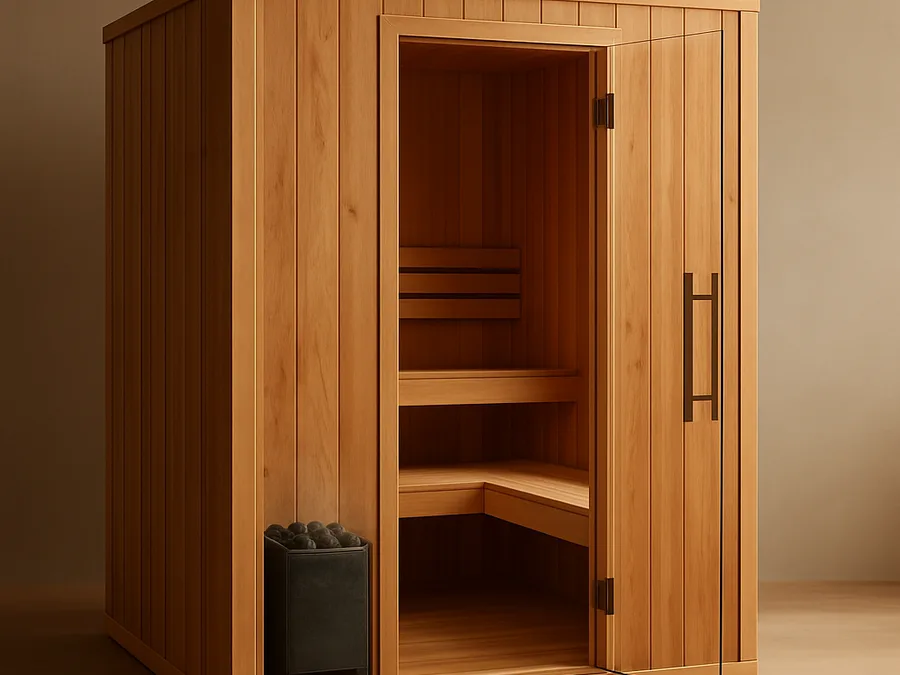
- Temp 150-195F
- Heat-up 30-45 min
- Power 240V circuit
- Install Licensed electrician
This is the real thing: high heat, and steam when you pour water on the rocks. It is also the format with the strongest long-term health research. The catch is electrical - heaters above ~3 kW need a dedicated 240V circuit sized to the heater, installed by a licensed electrician.
Harvia, HUUM, and Finlandia are common heater choices; Almost Heaven and SaunaLife make popular indoor kits. Budget $600-$1,800 for the electrical on top of the kit, more if your panel needs an upgrade.
What works
- Authentic high heat and steam (loyly)
- Strongest cardiovascular evidence base
- Premium kits last 20+ years
What to weigh
- Needs a 240V circuit and an electrician
- Slower heat-up, higher running cost
- Needs proper ventilation
Skip if: you rent, lack 240V capacity, or want plug-and-play simplicity.
Best for backyards & social use
Outdoor barrel or cabin sauna
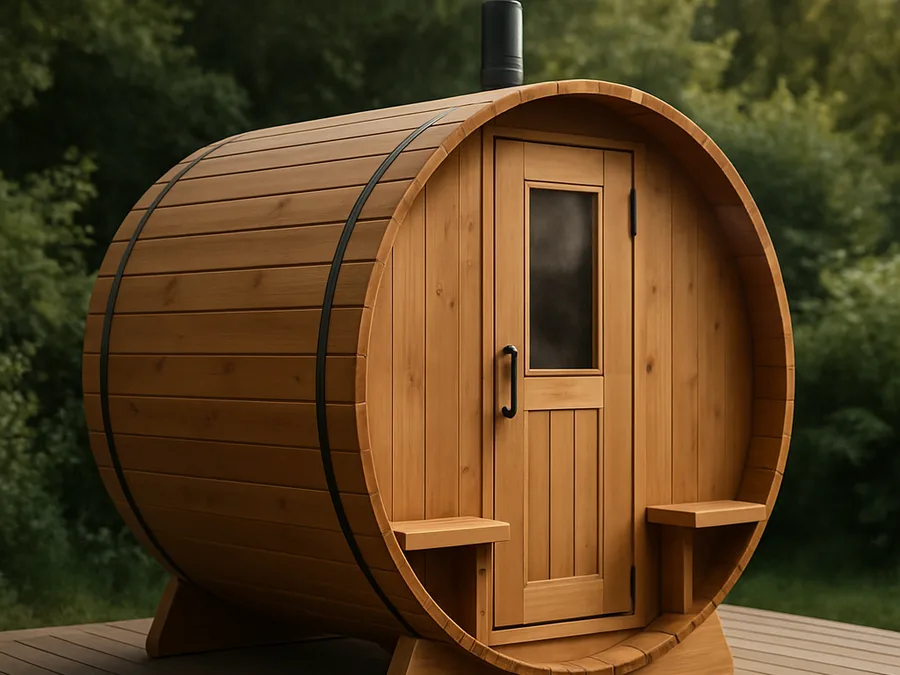
- Temp 150-195F
- Heat-up 40-60 min
- Power 240V or wood
- Install Pad + electrical/chimney
An outdoor build gets the heat (and the cold plunge afterward) out of the house. Barrels heat faster than boxy cabins because there is less dead air above your head, and they look the part in a backyard. You will need a level gravel pad or slab, plus either a 240V run (often trenched) or a wood stove with a code-compliant chimney.
Almost Heaven, Redwood Outdoors, Dundalk LeisureCraft, and SaunaLife are common outdoor brands. Thermowood or clear cedar shells weather best.
What works
- Keeps heat and moisture out of the house
- Great for groups; wood-burning option
- Barrels heat relatively quickly
What to weigh
- Foundation + outdoor electrical or chimney
- Trenching can be the biggest single cost
- More maintenance than indoor units
Skip if: you have no yard or want to avoid foundation and trenching work.
Best for apartments & the lowest entry cost
Portable sauna or sauna blanket
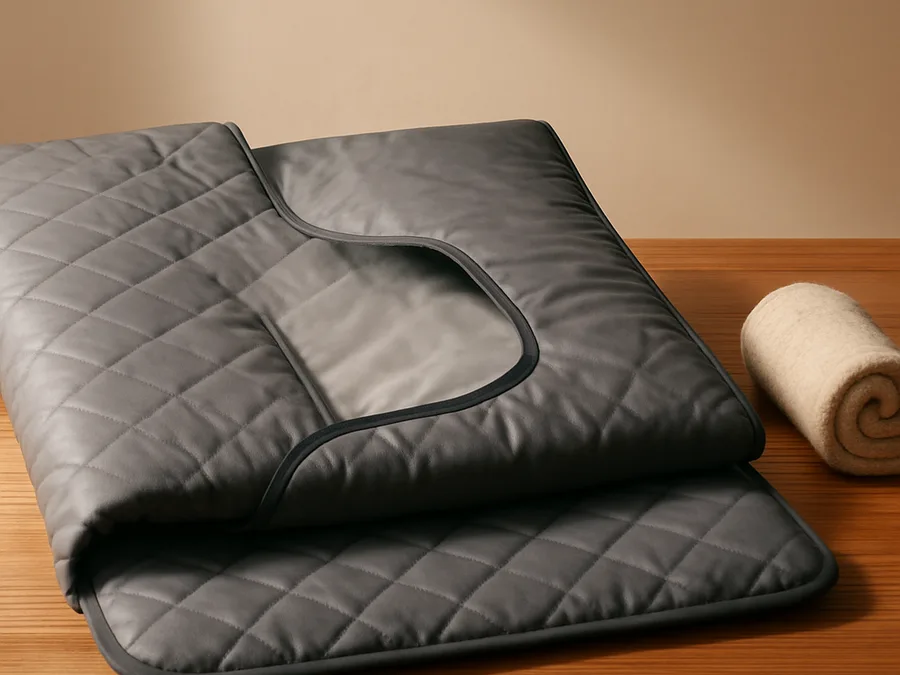
- Temp 120-150F
- Heat-up 5-15 min
- Power 120V plug-in
- Install None; folds away
When space or budget is tight, a portable infrared pod (you sit with your head out the top) or a sauna blanket gets you most of the heat benefit for a fraction of the cost and zero installation. Both fold away, which is why they win in apartments and small homes.
HigherDose, MiHigh, and Therasage are common blanket brands; SereneLife and LifePro make budget portable pods. Expect a milder experience and a shorter lifespan than a built cabin.
What works
- Cheapest way in; no install at all
- Folds away - ideal for renters
- Fast to heat for a quick session
What to weigh
- Mildest experience; head often outside the heat
- Less durable than a cabin
- Not a true social or steam sauna
Skip if: you want a full-body, room-style sauna experience.
Best for builders & cost-per-square-foot
DIY kit or build-from-scratch
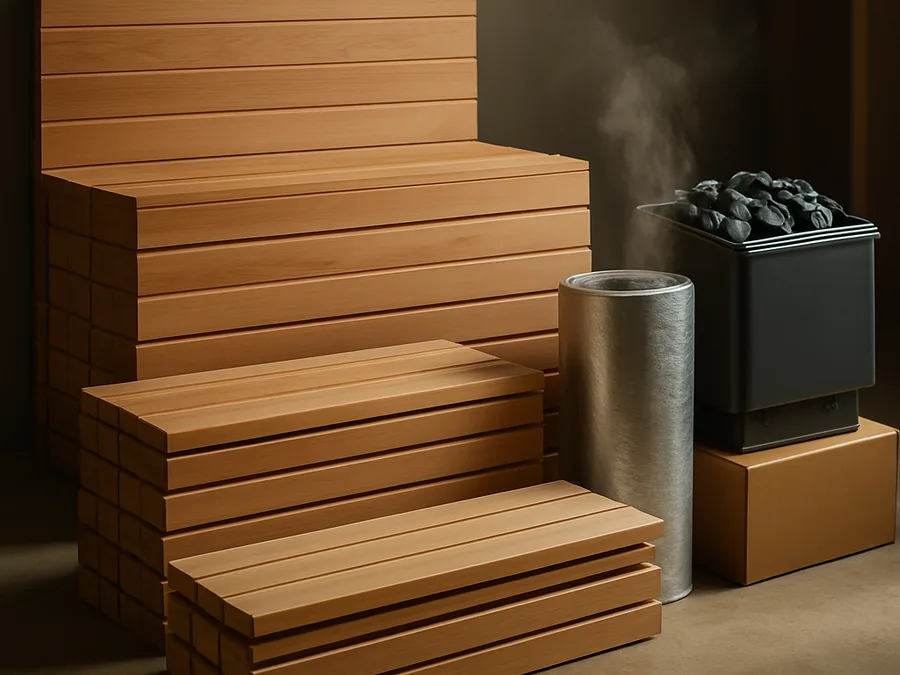
- Temp 150-195F
- Heat-up By heater size
- Power 240V (electric)
- Install Your labor + electrician
If you are handy, building your own sauna - from a pre-cut kit or fully from scratch - is the best value per square foot, especially for larger or custom rooms. You supply 40-100+ hours of intermediate-to-advanced carpentry; you still hire an electrician for a traditional heater.
Harvia, Superior Saunas, and SaunaPlace sell heaters, pre-cut kits, and materials. Use aspen or abachi on bench surfaces (they stay cool to the touch) and cedar or spruce on walls and ceiling. Never put resinous pine where skin touches it.
What works
- Best cost-per-square-foot, fully custom
- Kits remove the hardest cut-and-fit work
- You control wood and heater quality
What to weigh
- Real carpentry skill and time required
- Still need an electrician for 240V heat
- Mistakes in vapor barrier/venting are costly
Skip if: you are not comfortable with framing, insulation, and a vapor barrier.
Electrical & installation: the part that surprises people
This is where budgets blow up, so plan it before you fall in love with a heater.
- Traditional electric heaters need a dedicated 240V circuit sized to the heater: roughly 6 kW on a 30A/#10 circuit, 8-9 kW on 40A/#8. A licensed electrician and a GFCI breaker are non-negotiable. Budget $600-$1,800 for a straightforward run.
- A panel upgrade adds $1,500-$3,000 if your service has no spare capacity, and an outdoor trench can add hundreds to a couple thousand more. These two items are the biggest swing in the whole project.
- Infrared, portable, and blanket units plug into a standard 120V outlet - no electrician, no permit, which is a real part of their appeal.
- Wood-burning needs no heater circuit but does need a code-compliant chimney, heat shielding, and clearances - that install can cost 2-3x an electric heater fit.
- Size to comfort, not to the box. Advertised person capacity runs about a quarter to a third optimistic. Allow ~20 inches of bench per seated adult.
A measured word on health benefits
Saunas are associated with real benefits, but the evidence deserves honesty. Large observational studies - mostly on traditional Finnish saunas - link frequent use with lower cardiovascular and all-cause mortality, and with stress relief and recovery. These are associations, not proof that saunas cause those outcomes, and the strongest data is on traditional saunas rather than infrared.
Saunas are not for everyone. If you are pregnant, have heart disease, unstable or very low blood pressure, or take medications, talk to a physician before starting. Hydrate, keep early sessions short, and cool down gradually. We do not make detox, weight-loss, or disease-cure claims, because the evidence does not support them.
The bottom line
For most homes and renters, a plug-in infrared cabin is the easiest sauna to live with. If you want authentic high heat and steam and can run a 240V circuit, go traditional electric. Have a yard and want a social, get-out-of-the-house space? Build outdoor. Tight on space or budget? Start with a portable unit or blanket. Handy and chasing value? Build it. Whichever way you lean, price the electrical first and estimate the full build before you buy.
Frequently asked questions
Is an infrared or traditional sauna better for a home?
Do home saunas need special wiring?
How much does a home sauna cost?
What size sauna do I need?
Are home saunas actually good for you?
Can you put a sauna in an apartment?
Can you install a sauna in a bathroom?
Does a home sauna add value to your house?
How much does it cost to run a home sauna?
How we wrote this
A synthesis guide, not a hands-on review
This guide is a synthesis of manufacturer specifications, independent expert reviews, electrical and building-code references, and verified owner feedback from sauna communities. We have not heat-tested every product, so we recommend by format and use-case rather than inventing star ratings. Where we name brands, we link to the maker's spec sheet so you can verify claims yourself. Health information is kept conservative and cited.
We have not personally tested every product mentioned. Where we describe a product we are synthesizing manufacturer specifications, independent expert reviews, building-code and electrical references, and verified owner feedback. Health information is kept conservative and sourced. Read our full methodology.
References
Sources synthesized to write this guide. Manufacturer pages cite specifications; independent publications, clinics, and code references cite real-world performance, safety, and evidence.
-
Operating temperatures, heat mechanism, and how the two formats actually differ in use.
-
2026 price bands and running costs across infrared, traditional, barrel, and custom saunas.
- [3] Haven of Heat - Sauna electrical requirements (240V vs 120V, breaker & wire gauge) accessed Jun 8, 2026
Circuit, breaker, and wire-gauge sizing by heater kW; why traditional heaters need a dedicated 240V circuit.
-
Bench-length and volume math; advertised person capacity runs ~25-33% optimistic.
-
Wood thermal-conductivity table and why bench wood differs from wall wood.
-
Observational cohort linking frequent traditional sauna use with lower cardiovascular and all-cause mortality.
-
Clinic summary of benefits and the contraindications worth knowing before you start.
Disclosure: Some links on this page are affiliate links. Commissions never change our recommendations. Read the full disclosure.