Last updated
Reviewed Jun 10, 2026It is the first question almost everyone asks: infrared or traditional? Both make you sweat and both can be good for you, but they are fundamentally different machines. A traditional sauna heats the air (and a pile of rocks) to a high temperature and lets you pour water on for steam. An infrared sauna barely warms the air at all - it uses radiant light to heat your body directly, so you sweat at a much lower temperature.
That one difference drives everything else: how hot it feels, how it installs, what it costs to run, and which one fits your home. Here is the honest comparison, then a decision matrix by home type so you can choose quickly.
Infrared vs traditional, side by side
Every row below comes down to the same root cause - radiant light versus hot air and steam. There is no wrong answer here, just a trade between convenience and intensity.
| Factor | Infrared | Traditional |
|---|---|---|
| Operating temp | 110-150F (radiant) | 150-195F (some to 230F) |
| How it heats | Radiant light heats your body | Heats the air and rocks; body from outside in |
| Humidity / loyly | None (dry) | Yes - water on rocks, 10-60% RH |
| Heat-up time | 10-20 min | 30-45 min |
| Session length | 30-45 min | 15-20 min per round |
| Power draw | 1.5-3 kW | 4.5-9 kW |
| Electrical | Usually 120V plug-in | 240V dedicated circuit + electrician |
| Install cost | $0-$500 | $1,000-$3,000+ |
| Typical price (2026) | $1,500-$6,000 | $3,000-$14,000+ |
| Monthly running | $5-$15 | $15-$30 |
| Sweat character | Lower volume, 'deeper' feeling | High volume, fast onset |
| Health evidence | Thinner, smaller studies | Strongest long-term data |
| Best for | Daily indoor use, renters, recovery | Heat/steam lovers, social, outdoor, max evidence |
Operating temp
- Infrared
- 110-150F (radiant)
- Traditional
- 150-195F (some to 230F)
How it heats
- Infrared
- Radiant light heats your body
- Traditional
- Heats the air and rocks; body from outside in
Humidity / loyly
- Infrared
- None (dry)
- Traditional
- Yes - water on rocks, 10-60% RH
Heat-up time
- Infrared
- 10-20 min
- Traditional
- 30-45 min
Session length
- Infrared
- 30-45 min
- Traditional
- 15-20 min per round
Power draw
- Infrared
- 1.5-3 kW
- Traditional
- 4.5-9 kW
Electrical
- Infrared
- Usually 120V plug-in
- Traditional
- 240V dedicated circuit + electrician
Install cost
- Infrared
- $0-$500
- Traditional
- $1,000-$3,000+
Typical price (2026)
- Infrared
- $1,500-$6,000
- Traditional
- $3,000-$14,000+
Monthly running
- Infrared
- $5-$15
- Traditional
- $15-$30
Sweat character
- Infrared
- Lower volume, 'deeper' feeling
- Traditional
- High volume, fast onset
Health evidence
- Infrared
- Thinner, smaller studies
- Traditional
- Strongest long-term data
Best for
- Infrared
- Daily indoor use, renters, recovery
- Traditional
- Heat/steam lovers, social, outdoor, max evidence
How each one actually feels
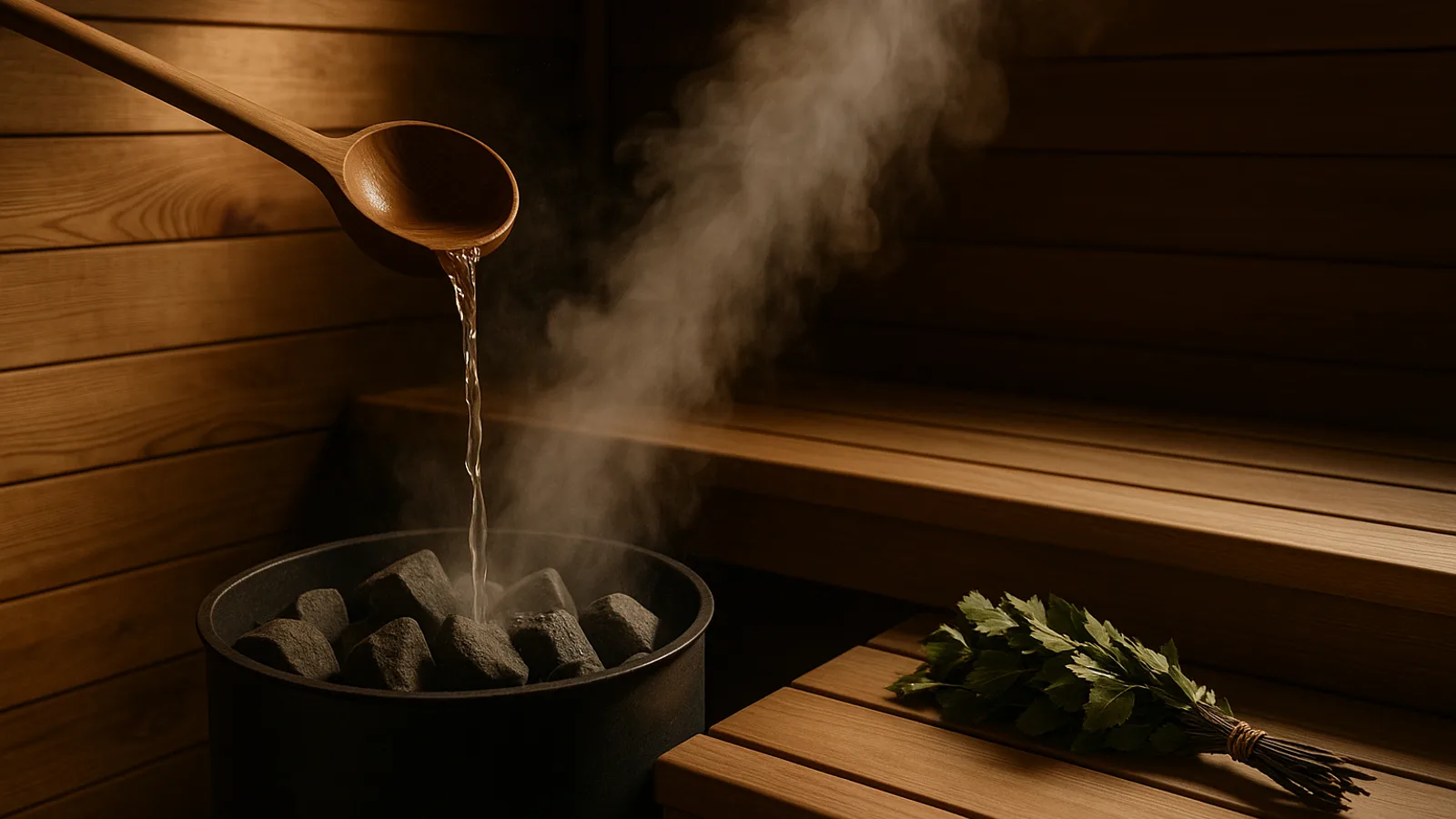
Traditional is the sauna most people picture: 175-195F, wood walls, a rock heater, and that wave of heat when you ladle water over the stones (loyly). Sweat comes fast and heavy, sessions are short (15-20 minutes with cool-down rounds), and it feels intense and immersive. Infrared feels milder and quieter - the air stays around 120-140F, so you can sit comfortably for 30-45 minutes while the radiant heat warms you from the inside. Many people find infrared easier to tolerate and easier to make a daily habit; purists find it lacks the punch and ritual of steam.
Installation & running cost
This is where the practical decision is usually made. An infrared cabin typically plugs into a normal 120V outlet and is essentially plug-and-play, with little or no electrician cost and about $5-$15 a month to run. A traditional electric sauna needs a dedicated 240V circuit sized to the heater, installed by a licensed electrician, which can add $1,000-$3,000+ before you account for a possible panel upgrade. If you are weighing the wiring, our sauna heater guide covers circuit and breaker sizing, and the cost calculator estimates the full build for either format.
Which is better for your home?
The right choice is mostly about your space and electrical situation, not a universal winner.
| Your situation | Lean toward | Why |
|---|---|---|
| Apartment / renter | Infrared | Plug-in, no 240V, no install; or a blanket/pod to start |
| Finished basement | Infrared (or traditional if wired) | Infrared is easiest; traditional needs a 240V run |
| Garage / cold room | Either | Traditional handles cold better; size the heater up |
| Backyard / outdoor | Traditional | Barrel or cabin with electric or wood heat |
| Athlete / recovery | Either | Infrared for daily use; traditional for max heat |
| Lowest entry cost | Infrared / blanket | Blankets from a few hundred dollars |
Apartment / renter
- Lean toward
- Infrared
- Why
- Plug-in, no 240V, no install; or a blanket/pod to start
Finished basement
- Lean toward
- Infrared (or traditional if wired)
- Why
- Infrared is easiest; traditional needs a 240V run
Garage / cold room
- Lean toward
- Either
- Why
- Traditional handles cold better; size the heater up
Backyard / outdoor
- Lean toward
- Traditional
- Why
- Barrel or cabin with electric or wood heat
Athlete / recovery
- Lean toward
- Either
- Why
- Infrared for daily use; traditional for max heat
Lowest entry cost
- Lean toward
- Infrared / blanket
- Why
- Blankets from a few hundred dollars
What the health evidence actually says
Be careful here, because marketing blurs it. The headline longevity findings - large Finnish cohort studies associating frequent sauna use with lower cardiovascular and all-cause mortality - were done on traditional, high-heat saunas, not infrared. Infrared has real, documented benefits for relaxation, comfort, and post-exercise recovery, but its evidence base is thinner and smaller-scale. Both bodies of research show association, not proof of cause.
The honest takeaway: do not buy infrared expecting the same longevity data as traditional, and do not buy either expecting detox or weight-loss miracles - those claims are not supported. Pick on lifestyle fit, because the sauna you will actually use several times a week is the one that helps you. For the full, cited picture, see our infrared sauna benefits and sauna benefits guides. Saunas are not for everyone: if you are pregnant, have heart disease, unstable blood pressure, or take medications, talk to a physician first.
The bottom line
If you live in an apartment or want a low-effort daily habit, go infrared - see our best infrared sauna guide, or start even cheaper with a portable infrared sauna or sauna blanket. If you want true high heat, steam, and the best-studied format - and you have the space and 240V - go traditional, indoors or as an outdoor sauna. Still weighing all the formats? Start with the best home sauna guide.
Frequently asked questions
Is an infrared or traditional sauna better?
Does an infrared sauna get as hot as a traditional one?
Which is cheaper to run?
Which has better health evidence?
Can I put either in an apartment?
How we wrote this
A synthesis guide, not a hands-on review
This comparison synthesizes manufacturer specifications, independent sauna references, electrical guidance, and peer-reviewed health research. We have not bench-tested every product, so we compare by format and use-case rather than inventing star ratings, and we keep health claims conservative and cited. The longevity research is overwhelmingly on traditional saunas - we say so rather than implying infrared shares the same evidence base.
We have not personally tested every product mentioned. Where we describe a product we are synthesizing manufacturer specifications, independent expert reviews, building-code and electrical references, and verified owner feedback. Health information is kept conservative and sourced. Read our full methodology.
References
Sources synthesized to write this guide. Manufacturer pages cite specifications; independent publications, clinics, and code references cite real-world performance, safety, and evidence.
-
Operating temperatures, heat mechanism, and how the two formats differ in everyday use.
-
Power draw, install differences, and the milder character of low-temperature infrared.
-
Why traditional electric heaters need a dedicated 240V circuit and infrared usually does not.
-
Observational cohort linking frequent traditional sauna use with lower cardiovascular and all-cause mortality.
-
Clinic summary of benefits and contraindications worth knowing before you start.