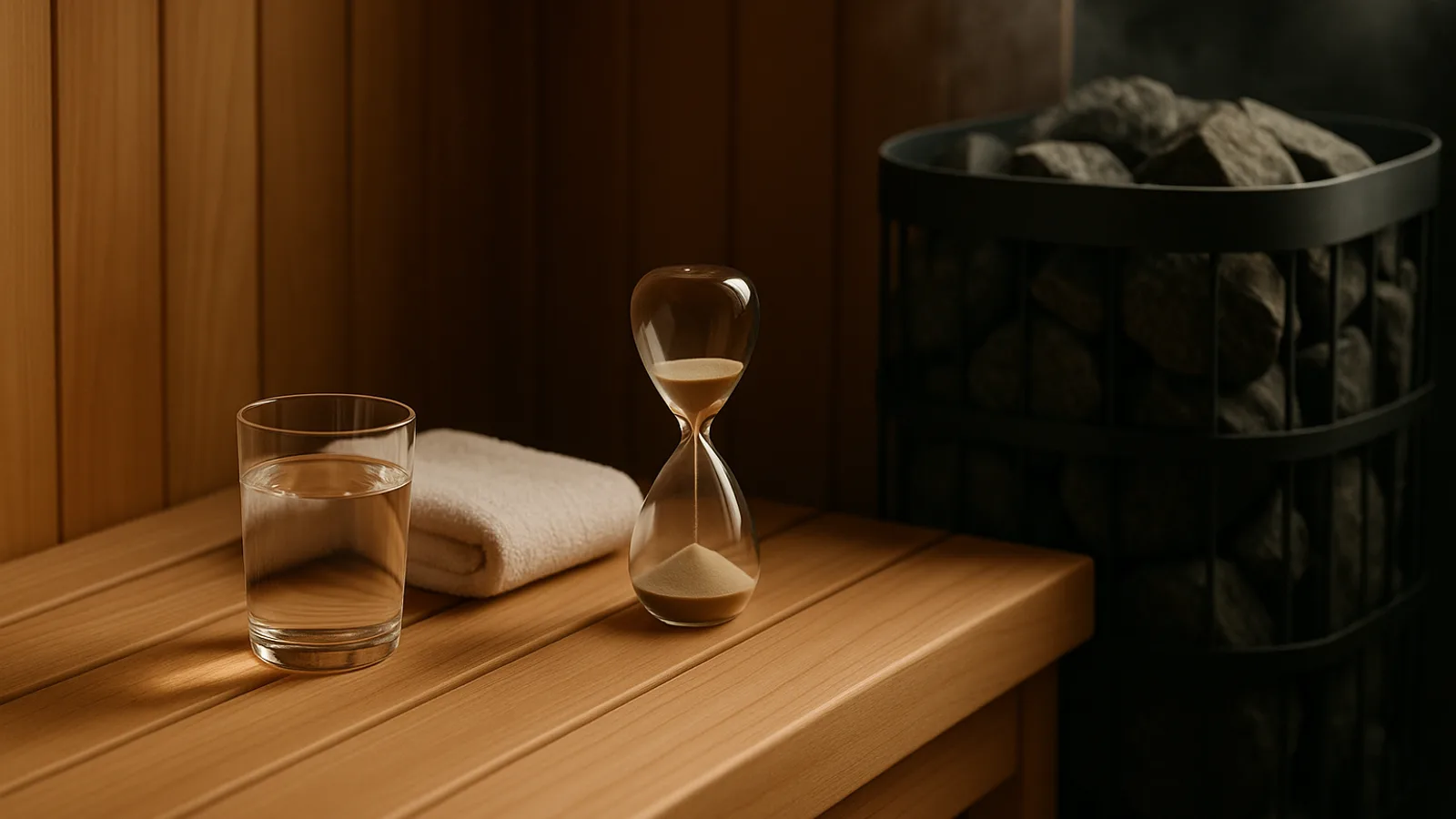
A sauna applies real heat stress to your body - that is part of why it may be beneficial, and also why it deserves a little respect. For healthy adults, sensible use is very safe. The points below help you keep it that way. This is general, educational information, not medical advice.
Check with a doctor first if you...
Major clinics including the Cleveland Clinic and Harvard Health advise caution and a conversation with your physician if you:
- Are pregnant or trying to conceive.
- Have a heart condition - unstable angina, a recent heart attack, severe aortic stenosis, or heart failure.
- Have uncontrolled high or low blood pressure.
- Are over 65 or under 16.
- Have a neurological condition such as epilepsy.
- Take medication that affects blood pressure, hydration, or heat tolerance.
Heat can also temporarily affect male fertility, which is worth knowing if you are trying to conceive.
Habits that keep it safe
- Hydrate before and after; have water nearby.
- Limit your time - around 15-20 minutes per round in a hot traditional sauna, less if you are new.
- Cool down gradually and be cautious with sudden cold plunges if you have any heart concern.
- Avoid alcohol before and during sauna use.
- Get out if you feel dizzy, nauseous, faint, or get a headache.
- Do not sauna alone if you are unwell or unsure how you will react.
Children and older adults
Young children overheat faster and should only use a sauna briefly, at lower temperatures, and with an adult - many guidelines suggest waiting until the teens for regular use. Older adults can sauna safely but should favor shorter, cooler sessions and check with a doctor if they have any cardiovascular condition.
Equipment safety
Electric and infrared saunas have no combustion, so there is no carbon monoxide risk. A wood-burning stove does involve fire - it needs a code-compliant chimney, heat shielding, and proper clearances, and the area should have a working smoke and CO alarm. Never block a heater's guard or place items on the stones or stove. Our DIY build guide covers ventilation and heater installation in more detail.
Frequently asked questions
Who should not use a sauna?
Is it safe to use a sauna after drinking alcohol?
Are saunas safe for your heart?
Sources
Last updated
Health information here is general and educational, kept conservative and cited - not medical advice. Check with a doctor before starting sauna use if you have a health condition.