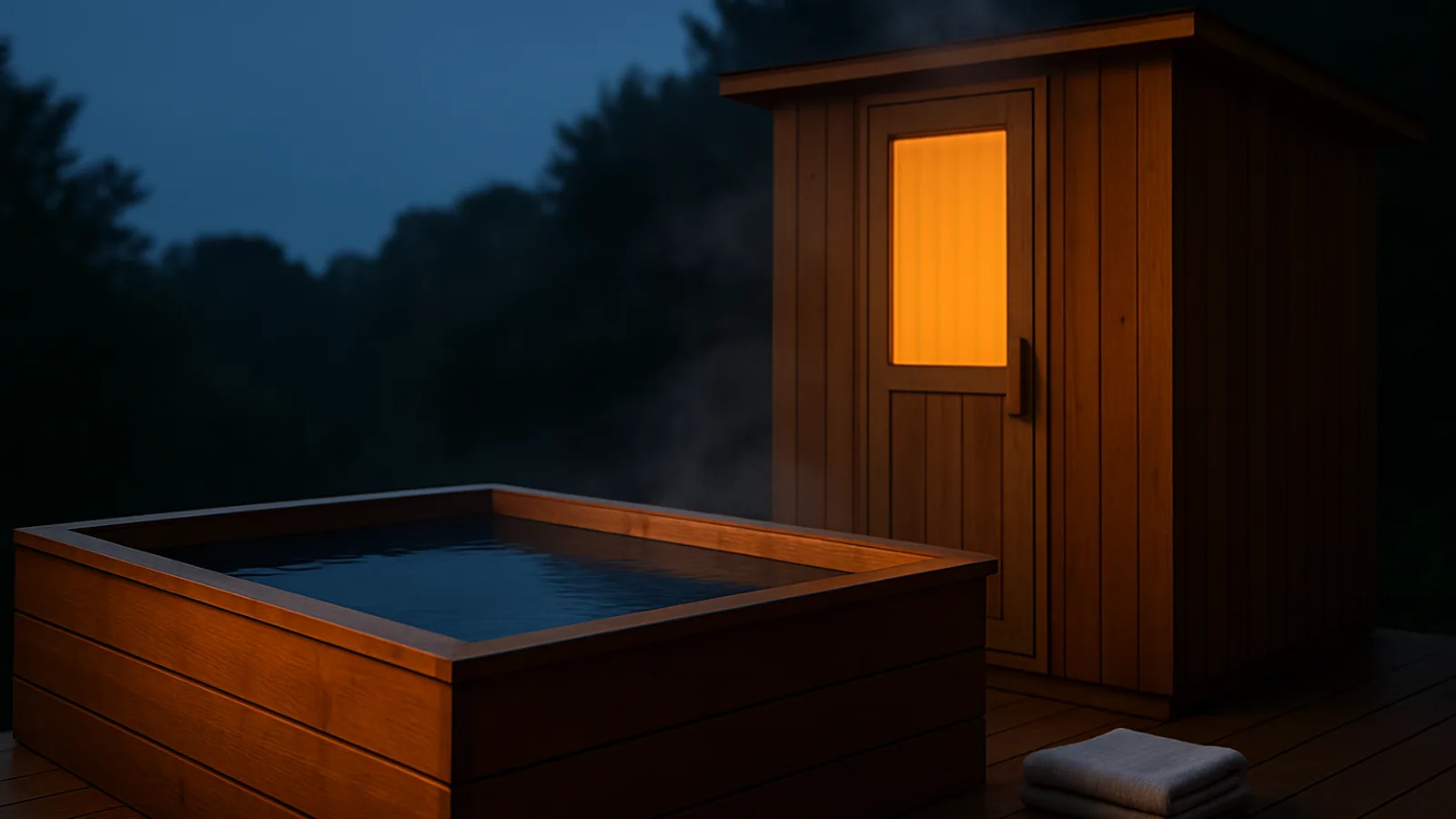
Cold plunging - sitting in water around 10-15°C (50-59°F) for a minute or a few - has gone from athlete recovery tool to wellness trend, and with it has come a wave of confident claims: melts fat, fixes your mood, supercharges immunity. The honest picture is more modest. The practice has some real, if early, benefits, and a few popular claims the evidence simply does not support yet.
One framing first: most cold-plunge research is small and short-term, often in young, mostly male participants. The most useful single source right now is a 2025 systematic review and meta-analysis in PLOS One that pooled 11 studies and 3,177 people. It is the lens for most of what follows - and even its authors call for larger, better trials.
Stress: a delayed effect, not an instant fix
The 2025 review found a significant reduction in stress about 12 hours after cold-water immersion - but no significant effect immediately afterward, or at 1, 24, or 48 hours. That is a more interesting and more honest result than "cold water calms you down." It suggests cold exposure works partly as a hormetic stressor: a short, sharp challenge your body adapts to, with benefits showing up later rather than in the moment. Plenty of people do report feeling alert and clear-headed right after a plunge, which is real and worthwhile - just not the same as a measured stress reduction.
Sleep and quality of life: promising
Across the pooled studies, cold-water immersion was associated with improvements in sleep quality and self-reported quality of life. These are encouraging signals rather than settled facts - the studies are few and the samples small - but they are among the more consistent findings, and they line up with what regular plungers tend to describe.
Mood and immunity: not supported (yet)
Two of the loudest claims are the weakest. The review found little evidence that cold-water immersion boosts mood or immunity. There was one intriguing narrative finding - regular cold-shower takers had about a 29% reduction in sickness absence from work - but that is not strong proof of an immune effect, and the meta-analysis of immune markers showed no significant change. Harvard Health reaches the same conclusion: the proof behind the big claims is shaky.
Recovery and soreness: the oldest, most credible use
Athletes have used ice baths for decades for a reason. As the Mayo Clinic Health System notes, cold-water immersion appears to reduce the exercise-induced muscle damage and inflammation that drive next-day soreness, helping restore performance. There is an important caveat: doing it right after resistance training may blunt some of the muscle-building (hypertrophy and strength) adaptations you trained for. So if you lift for size or strength, keep the plunge away from the hour or two after that session - and remember that heat does not appear to blunt the muscle-building signal, which is one reason a sauna can be the friendlier recovery tool on lifting days.
The inflammation point cuts both ways
The review measured a clear spike in inflammation immediately and one hour after immersion - the body reacting to a stressor. Over time, that repeated, controlled stress is thought to drive helpful adaptation. But the short-term spike is exactly why people with pre-existing conditions need to be careful: the same jolt that helps a healthy athlete adapt can be a genuine strain elsewhere. This is why "reduces inflammation" is too simple a headline - it goes up acutely before any longer-term benefit.
What to ignore
- Fat loss / "brown fat" weight-loss claims. Cold exposure can nudge metabolism, but there is no good evidence it is a meaningful weight-loss method. Treat it as marketing.
- "Detox." Like saunas, cold plunges do not detox you - your liver and kidneys do that.
- Guaranteed mood or immunity boosts. Popular, but not supported by the current pooled evidence.
- Colder is always better. Lower temperatures raise risk faster than benefit. There is no proven "optimal" extreme.
The honest bottom line
Cold plunging looks like a modest, real tool for sleep, recovery, and possibly stress resilience - not a cure-all, and not risk-free. If you enjoy it and you are healthy, the downside of a sensible routine is small. If you have a heart, blood-pressure, rhythm, or circulation condition, diabetes, or are pregnant, the calculus changes and you should talk to a doctor first. When you are ready, our how to cold plunge guide covers safe temperatures and times, contrast therapy at home shows how to pair it with a sauna, and cold plunge vs sauna weighs the two if you are deciding between them.
Frequently asked questions
Does a cold plunge actually reduce stress?
Do cold plunges boost your immune system or mood?
Is a cold plunge good for muscle recovery?
Is cold plunging safe?
Sources
- Cain et al., 2025, PLOS One - Effects of cold-water immersion on health and wellbeing: a systematic review and meta-analysis
- University of South Australia / ScienceDaily - The big chill: is cold-water immersion good for our health? (summary of the 2025 review)
- Harvard Health - Cold plunges: healthy or harmful for your heart?
- Cleveland Clinic - What to know about cold plunges
- Mayo Clinic Health System - Cold-water plunging health benefits
Last updated
Health information here is general and educational, kept conservative and cited - not medical advice. Cold-water immersion is not safe for everyone; check with a doctor before starting if you have a heart, blood-pressure, circulation, or other health condition, or are pregnant.